

The Techwear Ultimate Guide: Mastering Futuristic Urban Utility
Techwear is not just a fashion trend; it is a response to the increasingly complex urban environment. In a world where weather patterns are unpredictable and the city is our primary habitat, clothing must do more than just cover the body. It must protect, perform, and adapt.
At CloTechNow, we view techwear as "hardware for the human body." This guide is the most comprehensive resource available, designed to bridge the gap between aesthetic cyberpunk dreams and high-performance reality. Whether you are a seasoned "tech-ninja" or a curious newcomer, this guide will dissect what makes techwear the pinnacle of modern apparel.
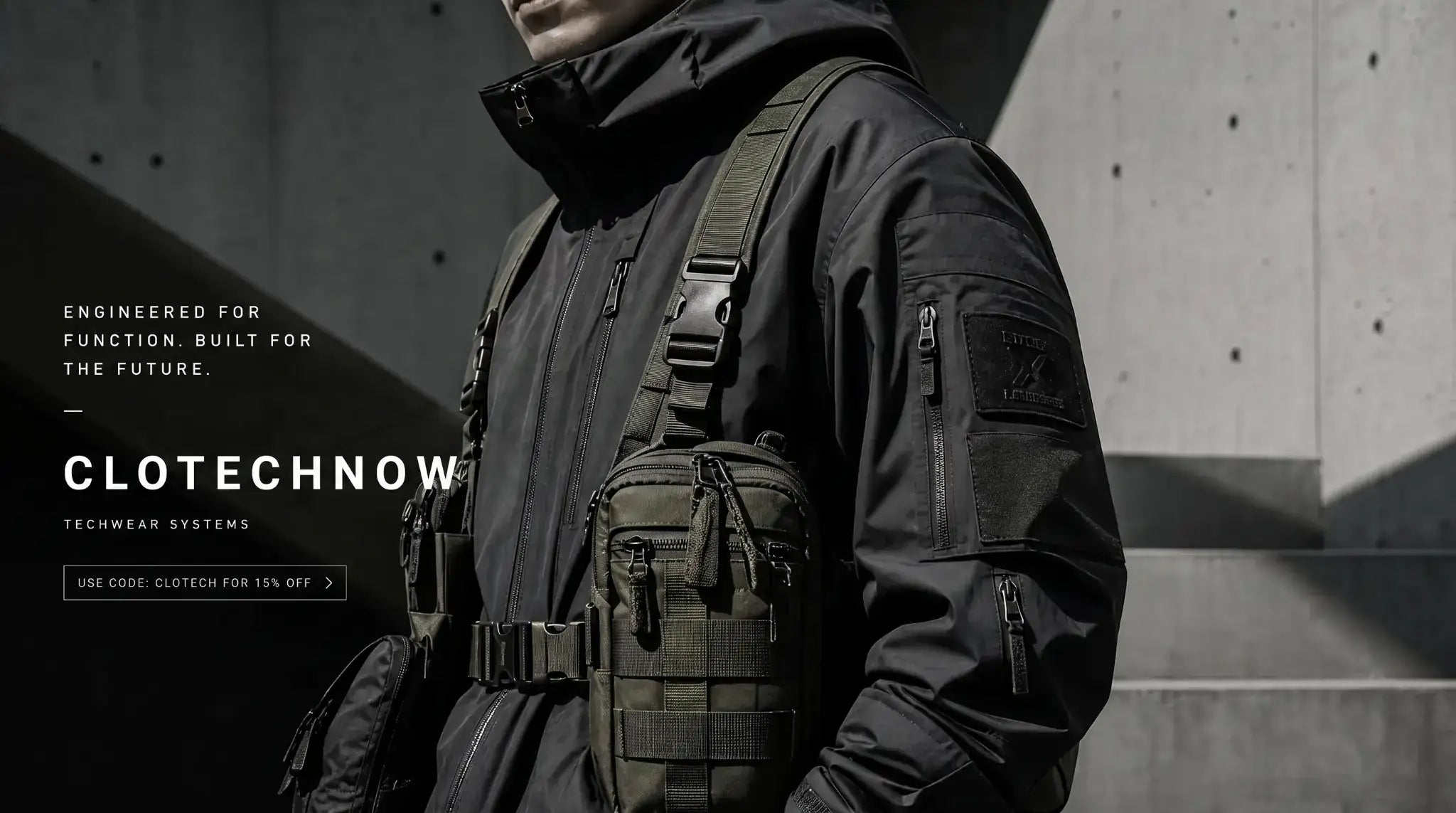
// SYSTEM STATUS: OPTIMIZED LOADOUT //
1. The Philosophy of Techwear: Form Follows Function
Most fashion guides start with how things look. In techwear, we start with how things work. The core philosophy is "Form Follows Function." In the techwear community, an outfit that looks "cool" but fails in a rainstorm is considered a failure.
- Utility over Aesthetics: Every zipper, pocket, and strap must have a purpose. If a strap doesn't help with weight distribution or modularity, it doesn't belong.
- Urban Resilience: The ability to move from a climate-controlled office to a rain-soaked street without changing. Techwear is designed for the "transitional spaces" of the modern city.
- Modular Design: The capacity to add or remove layers based on environmental demands. This is often achieved through "MOLLE" systems or internal slings.
2. The Core Pillars: Fabric, Construction, and Utility
To truly master techwear, you must understand the technical specifications that separate high-end gear from "fast fashion" imitations.

// TECHNICAL DATA: THE LAYERING SYSTEM //
A. Fabric Science (Beyond Gore-Tex )
| Fabric Name | Primary Benefit | Best Use Case |
|---|---|---|
| X-Pac | Ultra-lightweight & Waterproof | Bags, backpacks, and structural accents. |
| Schoeller Dryskin | 4-way stretch & Breathability | Technical pants and base layers. |
| Stotz EtaProof | Organic waterproofing | High-end shells with a natural feel. |
| Cordura | Extreme abrasion resistance | Reinforcement on knees, elbows, and seats. |
B. Advanced Construction Techniques
It’s not just the fabric; it’s how it’s put together. High-quality techwear utilizes construction methods borrowed from aerospace and extreme mountaineering:
- Articulated Joints: Pre-shaped knees and elbows that allow for a full range of motion without the fabric bunching.
- Taped Seams: Ensuring that water doesn't leak through the needle holes in the stitching.
- Laser Cutting: Creating precise edges that don't fray, reducing overall weight.
3. The "Hardware" Guide: Building Your Loadout
The Shell: Your Primary Defensive Perimeter
Your shell is your primary defense. It should be waterproof (hardshell) or water-resistant (softshell). Explore our Techwear Jackets Collection.
The Mid-Layer: Thermal Regulation Hardware
The mid-layer's job is to trap heat. In techwear, we use "active insulation" like Primaloft or technical fleece that retain heat even when damp.
The Base Layer: The Moisture Management Engine
Never use cotton. Cotton absorbs moisture and stays cold. Use merino wool or synthetic "wicking" fabrics. Check out our Techwear Shirts & Base Layers.
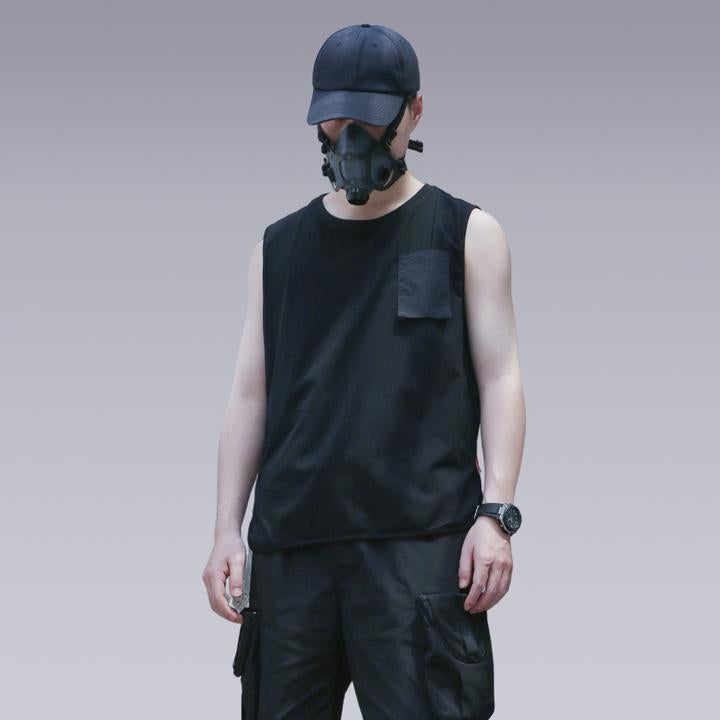
// COMPONENT: MOISTURE-WICKING BASE ENGINE //
The Bottoms: Tactical Utility and Mobility
Techwear pants are defined by the "tapered" silhouette and "cargo" capacity. The Ninja Tactical Cargo Pants are a perfect example.
4. What Other Guides Miss: The "Gray Man" Concept
Many guides focus on the "Full Ninja" look. However, the "Gray Man" concept is the secret weapon. It’s about blending high-performance gear into a daily wardrobe without looking like a character from a video game.
- Visual Deception: A jacket might look like a standard blazer but feature internal laser-cut pockets.
- Color Theory: Incorporate Urban Camouflage—shades of Navy, Charcoal, and Olive.
- Silent Performance: Avoiding the "swish-swish" sound of cheap nylon.
5. Advanced Styling: The Rule of Proportions
Techwear is a game of silhouettes.
- The "V" Silhouette: Voluminous hardshell jacket paired with heavily tapered cargo pants.
- The "Linear" Silhouette: Slim-fit technical base layer paired with straight-cut articulated pants.
6. Maintenance: Keeping Your Gear Alive
- DWR Restoration: Use technical washes like Nikwax to reactivate the coating.
- Washing: NEVER use fabric softeners. They clog the pores of breathable membranes.
7. The Psychology of Techwear: The Preparedness Mindset
Beyond the aesthetic, techwear is about Agency. You aren't just dressed; you are equipped.
8. The Future: Sustainability and Smart Fabrics
- Phase Change Materials (PCM ): Fabrics that sense body temperature and adjust insulation levels.
- Eco-Technical Fabrics: Garments made from 100% recycled ocean plastics.
READY TO UPGRADE YOUR URBAN ARMOR?
Use Code CLOTECH15 for 15% OFF Your Entire Loadout.
SHOP THE FULL COLLECTION© 2026 CloTechNow. Designed for the Future.
0 comments